
Competitive Exam Preparation Strategy 2026: Modern Approaches for Maximum Success
 aspirantmitraa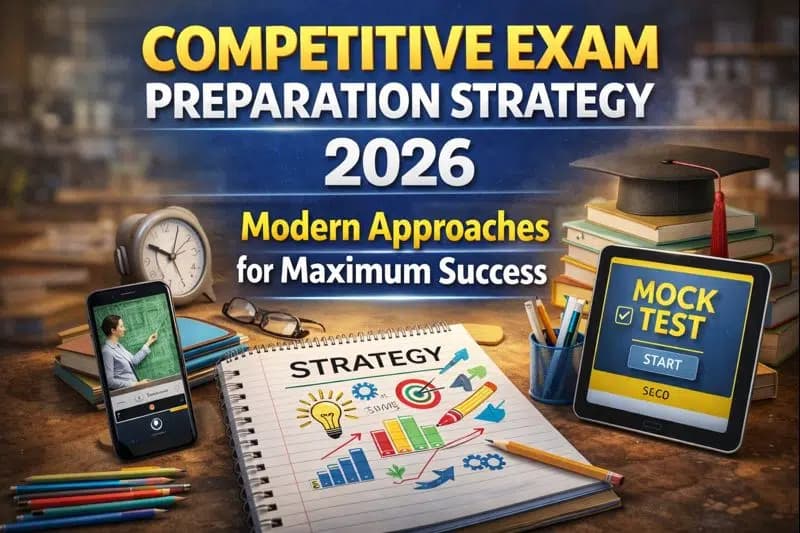
Competitive examinations continue to be the primary gateway to premier educational institutions and government positions in India. As the academic landscape evolves in 2026, preparation strategies must adapt to changing exam patterns, technological integration, and shifting evaluation methodologies. This comprehensive guide explores effective preparation approaches for various competitive exams, helping aspirants navigate their journey from planning to success.
Ready to Ace Your Exam?
Practice with our comprehensive test series designed by experts. Get detailed solutions, performance analytics, and boost your preparation.
Explore Test SeriesUnderstanding the Competitive Exam Landscape in 2026
The competitive examination ecosystem in India encompasses diverse tests serving different academic and career pathways. Understanding this landscape helps students choose appropriate exams aligned with their goals and capabilities.
Major Categories of Competitive Exams
Engineering Entrance Exams: JEE Main, JEE Advanced, state engineering entrance tests, and university‑specific examinations determine admission to undergraduate engineering programs across thousands of institutions.
Medical Entrance Exams: NEET remains the single‑window entrance for MBBS, BDS, and AYUSH courses, making it one of India's most competitive examinations with over 18 lakh annual applicants.
Management Entrance Exams: CAT, XAT, SNAP, NMAT, and other MBA entrance tests evaluate candidates for admission to business schools and management programs.
Civil Services Examinations: UPSC conducts examinations for Indian Administrative Service, Indian Police Service, and other prestigious government positions.
Banking and SSC Exams: IBPS, SBI, and Staff Selection Commission examinations provide pathways to government banking and administrative positions.
Each category has unique patterns, syllabi, and preparation requirements, though certain fundamental strategies apply across all competitive examinations.
Evolving Exam Patterns and Trends
Competitive examinations in 2026 reflect several important trends that impact preparation strategies and success factors.
Shift Toward Competency‑Based Assessment
Traditional rote learning‑focused questions are gradually being replaced by questions testing application, analysis, and problem‑solving abilities. Exams increasingly present scenarios requiring candidates to apply concepts rather than simply recalling information.
This shift means successful preparation must emphasize understanding over memorization. Students need to develop the ability to use knowledge in unfamiliar contexts and solve complex multi‑step problems.
Technology Integration in Examination
Computer‑based testing has become standard for most competitive exams, bringing changes in question presentation, time management, and answer submission processes.
Key Technology Features:
- On‑screen question navigation and marking
- Timer displays showing remaining time
- Section‑wise time allocation in some exams
- Question review and status tracking
- Virtual calculators (in permitted exams)
Familiarity with computer‑based test interfaces through regular mock tests is essential. Students comfortable with digital testing environments perform significantly better than those encountering the format for the first time during actual exams.
Negative Marking Precision
Most competitive exams implement negative marking to discourage random guessing. The penalty typically ranges from 0.25 to 1 mark per incorrect answer, depending on the examination.
This creates a crucial strategic dimension: knowing when to attempt questions and when to skip them. Students must develop judgment about their confidence levels and understand probability mathematics regarding guessing.
Strategic Approach to Negative Marking:
- Attempt questions only when confidence exceeds 70‑80%
- Never guess randomly on questions with no elimination possible
- Use intelligent elimination to improve guessing probability
- Practice accuracy improvement alongside speed development
Multiple Attempt Opportunities
Many examinations now offer multiple sessions or attempts annually. JEE Main conducts two sessions (January and April), allowing students to improve scores. This structure reduces single‑exam pressure but requires strategic planning about preparation cycles.
Students should view first attempts as learning experiences that reveal weaknesses, then use subsequent attempts to demonstrate improvement. However, avoiding complacency during first attempts remains important.
Foundation Building: The Critical First Phase
Successful competitive exam preparation begins with strong conceptual foundations. Rushing into problem‑solving without proper understanding leads to superficial learning that crumbles under exam pressure.
NCERT Mastery Imperative
For exams like JEE, NEET, and various state entrance tests, NCERT textbooks remain the single most important resource. These books form the foundation upon which entire examination syllabi are built.
Why NCERT Matters:
- Exam questions directly test NCERT content
- Explanations are clear and accessible
- Progressive difficulty helps gradual learning
- Comprehensive coverage ensures no gaps
- Official syllabus basis for all boards
Many toppers across competitive exams credit NCERT textbook mastery as their primary success factor. Reading NCERT books multiple times with increasing depth each cycle creates robust conceptual understanding.
Building Subject‑Specific Foundations
Each subject requires different foundational approaches:
Mathematics: Focus on understanding derivations and formula applications. Don't just memorize formulas; understand where they come from and why they work. Practice diverse problem types to develop pattern recognition.
Physics: Conceptual clarity is paramount. Understand the physical meaning behind mathematical equations. Visualize scenarios and practice applying multiple concepts to single problems.
Chemistry: Balance memorization with understanding. Physical chemistry requires mathematical approach, organic chemistry needs mechanism understanding, and inorganic chemistry involves strategic memorization using patterns and mnemonics.
Biology: Detailed reading and understanding are essential. Create visual mind maps connecting related concepts. Regular revision prevents forgetting detailed information.
Verbal Sections: Build vocabulary systematically, practice reading comprehension daily, and understand question patterns in reasoning sections.
Creating Effective Study Plans
Structured study plans transform vague preparation intentions into concrete daily actions, significantly improving consistency and coverage.
Components of Comprehensive Study Plans
Syllabus Analysis: Begin by thoroughly analyzing the complete exam syllabus. Break it down into topics and estimate time requirements for each based on complexity and personal comfort levels.
Realistic Time Allocation: Calculate available study hours realistically, accounting for school/college, sleep, meals, and necessary breaks. Build plans around actual available time rather than idealistic schedules.
Subject Balancing: Allocate time proportionally to subject weightage in the exam. For NEET, biology deserves approximately 40‑45% of study time given its 360‑mark weightage. For JEE, balanced distribution across PCM works better.
Topic Completion Tracking: Maintain a checklist marking completed topics. This visual progress tracking motivates continued effort and prevents overlooking portions.
Flexibility Incorporation: Build buffer time into schedules accounting for unexpected events, slower‑than‑expected progress, or need for additional practice in difficult topics.
Daily, Weekly, and Monthly Cycles
Daily Routine: Focus on 2‑3 subjects daily rather than trying to study everything each day. This allows deeper engagement with fewer topics.
Weekly Goals: Set clear weekly targets for chapters to complete, mock tests to attempt, and revision sessions to conduct.
Monthly Reviews: Conduct comprehensive monthly assessments testing all previously studied material. This spacing of revision strengthens long‑term retention.
Balancing New Learning and Revision
A common mistake is continuously learning new topics without adequate revision of previously studied material. The brain forgets information not regularly recalled.
Effective Revision Cycle:
- Immediate revision: Same day evening
- Short‑term revision: Within a week
- Medium‑term revision: Within a month
- Long‑term revision: Every 2‑3 months
This spaced repetition approach dramatically improves retention compared to one‑time learning.
Practice Strategy: From Problems to Perfection
Theoretical knowledge alone never translates to competitive exam success. Extensive problem‑solving practice develops the speed, accuracy, and pattern recognition essential for high scores.
Topic‑Wise Question Practice
After completing each topic, solve 30‑50 questions specifically from that topic. This focused practice reinforces concepts and reveals understanding gaps before moving forward.
Quality Over Quantity: Solving fewer problems with deep analysis of each solution beats mechanically solving hundreds without understanding. Learn from every problem, especially mistakes.
Difficulty Progression: Start with basic problems building confidence, gradually progress to moderate difficulty, then tackle challenging problems that stretch abilities.
Previous Year Paper Analysis
Solving past examination papers reveals crucial insights about question patterns, important topics, difficulty levels, and time management requirements.
How to Use Previous Papers:
- Solve papers in actual exam duration
- Analyze difficulty distribution across topics
- Identify frequently repeated question types
- Note topics with higher question frequency
- Study solutions thoroughly, not just check answers
Ten years of previous papers provide comprehensive understanding of examination patterns and expectations.
Mock Test Strategy
Mock tests serve as dress rehearsals for actual examinations, building familiarity with exam conditions while revealing preparation gaps.
Mock Test Schedule:
- Begin full‑length mocks 3‑4 months before exam
- Take 2‑3 mock tests weekly in final month
- Simulate actual exam conditions strictly
- Attempt at same time as actual exam schedule
- Use computer‑based mocks for CBT exams
Post‑Mock Analysis:
- Identify subject‑wise performance patterns
- Note topics requiring additional practice
- Analyze time management per section
- Calculate accuracy rates per topic
- Track improvement across successive mocks
Many students make the mistake of taking mock tests but not analyzing them thoroughly. The analysis provides more learning than the test itself.
Time Management Mastery
Competitive exams test not just knowledge but the ability to apply knowledge quickly under pressure. Effective time management often separates successful candidates from unsuccessful ones with similar knowledge levels.
Pre‑Exam Time Management
Two‑Hour Study Sessions: The brain maintains optimal focus for approximately 90‑120 minutes. Structure study sessions accordingly with proper breaks.
Eliminating Time Wasters: Social media, excessive phone usage, and aimless internet browsing consume hours daily. Using app blockers and phone‑free study zones protects valuable preparation time.
Strategic Topic Sequencing: Study difficult or unfamiliar topics when mental energy is highest (typically mornings for most people). Reserve easier revision tasks for lower‑energy periods.
During‑Exam Time Management
Section Time Allocation: Pre‑decide time limits per section. For a 180‑minute exam with three equal sections, allocate approximately 60 minutes per section, though flexibility based on difficulty is acceptable.
Question Skipping Strategy: Don't get stuck on difficult questions during first pass. Mark them for review and return after completing all approachable questions.
Time Monitoring: Check remaining time every 20‑30 minutes, ensuring pace maintains to complete all sections.
Review Time: Reserve last 10‑15 minutes for reviewing marked questions and checking for silly mistakes in calculations or answer marking.
Managing Exam Stress and Mental Health
Competitive exam preparation spans months or years, creating sustained psychological pressure. Managing stress and maintaining mental health are as important as academic preparation.
Recognizing Stress Symptoms
Physical Symptoms: Sleep disturbances, appetite changes, frequent headaches, fatigue despite rest
Emotional Symptoms: Persistent anxiety, mood swings, irritability, loss of interest in activities
Cognitive Symptoms: Difficulty concentrating, memory problems, negative self‑talk, catastrophic thinking
Recognizing these symptoms early allows intervention before they significantly impact preparation or health.
Stress Management Techniques
Regular Physical Exercise: Even 30 minutes of physical activity daily significantly reduces stress hormones and improves mood. Walking, running, yoga, or sports all help.
Adequate Sleep: Sacrificing sleep for study is counterproductive. The brain consolidates learning during sleep. Aim for 7‑8 hours nightly.
Meditation and Breathing: Simple meditation or deep breathing exercises calm the nervous system and improve focus. Even 10‑minute sessions provide benefits.
Social Connection: Maintain relationships with friends and family. Social support provides emotional buffering against stress.
Realistic Expectations: Perfectionism increases stress. Accept that everyone has weak areas and focus on overall improvement rather than flawless performance.
When to Seek Help
If stress significantly impacts daily functioning, sleep, appetite, or creates thoughts of self‑harm, professional help from counselors or mental health professionals is essential. Many educational institutions now provide counseling services for exam stress.
Technology Tools for Modern Preparation
Educational technology in 2026 offers powerful tools that, when used strategically, significantly enhance preparation efficiency and effectiveness.
Digital Learning Platforms
Numerous platforms provide video lectures, practice questions, and adaptive learning experiences:
Benefits:
- Access to expert teachers regardless of location
- Learn at individual pace with pause and replay
- Visual demonstrations of complex concepts
- Immediate doubt resolution through Q&A features
Caution: Video consumption without active problem‑solving creates illusion of understanding without building actual capability. Always follow video lectures with problem practice.
Practice and Assessment Apps
Mobile applications offer convenient practice opportunities during commute time or breaks:
- Topic‑wise question banks
- Timed mini‑quizzes
- Progress tracking and analytics
- Personalized weakness identification
However, avoid excessive phone‑based study. The same device hosts distractions, and extended phone screen time causes eye strain.
Online Mock Test Platforms
Computer‑based mock tests from established platforms provide exam‑like practice essential for CBT exams:
- Realistic interface matching actual exams
- Comprehensive performance analytics
- Comparative ranking against other aspirants
- Detailed solution explanations
Choose platforms carefully based on quality of questions and accuracy of solutions rather than cheapest options.
Common Preparation Mistakes to Avoid
Learning from common mistakes helps students avoid wasting time and effort on ineffective approaches.
Strategy Mistakes
Skipping Basic Resources: Jumping to advanced books without NCERT mastery creates weak foundations that eventually collapse under exam pressure.
Over‑Reliance on Coaching: Attending classes without personal study and practice yields poor results. Coaching supplements personal effort but cannot replace it.
Analysis Paralysis: Spending excessive time researching "perfect" study materials or methods instead of actually studying. Start with basics and adjust along the way.
Comparison Trap: Constantly comparing progress with peers creates anxiety without improving performance. Focus on personal growth trajectories.
Execution Mistakes
Irregular Study Patterns: Studying intensely for a few days then taking breaks creates inefficient learning compared to consistent daily effort.
Neglecting Weak Areas: Avoiding difficult topics hoping they won't appear in exams. Comprehensive preparation requires addressing weaknesses, not hiding from them.
Passive Reading: Reading textbooks without actively solving problems creates familiarity without capability. Active problem‑solving is essential.
Mock Test Without Analysis: Taking numerous mocks without thoroughly analyzing mistakes wastes the primary value of practice testing.
Subject‑Specific Advanced Strategies
While general strategies apply across exams, each subject also benefits from specialized approaches.
Mathematics Excellence
Formula Sheet Creation: Maintain concise formula sheets for each chapter. Regular review prevents forgetting.
Multiple Solution Methods: Learn different approaches to problem types. This flexibility helps when one method seems difficult in specific questions.
Calculation Speed: Practice mental mathematics and approximation techniques. Calculator absence in many exams makes this crucial.
Physics Mastery
Derivation Understanding: Don't just memorize formulas. Understand derivations to reconstruct forgotten formulas during exams.
Numerical Practice: Physics requires extensive numerical problem‑solving practice. Theory alone is insufficient.
Unit Analysis: Use dimensional analysis to check answer reasonability and sometimes solve problems.
Chemistry Strategy
Reaction Mechanisms: For organic chemistry, understand mechanisms rather than memorizing individual reactions. Patterns emerge making learning more efficient.
Periodic Trends: Inorganic chemistry becomes much easier with thorough understanding of periodic table trends.
Numerical Focus: Physical chemistry numerical requires regular practice like mathematics or physics problems.
Biology Approach
Visual Learning: Create or use diagrams, flowcharts, and mind maps extensively. Biology involves numerous interconnected concepts better understood visually.
Consistent Reading: Unlike subjects requiring problem‑solving, biology requires regular reading and re‑reading for detailed retention.
Connection Building: Link related topics across chapters. Understanding connections creates deeper comprehension than isolated fact memorization.
Final Month Strategy
The last month before examinations requires strategic approach different from regular preparation phases.
Revision Over New Learning
Stop learning new topics in the final month. Focus entirely on revising previously studied material, strengthening strong areas while improving weak ones.
Intensive Mock Testing
Increase mock test frequency to every 2‑3 days. This creates exam‑taking rhythm and identifies last‑minute improvement areas.
Formula and Fact Consolidation
Create ultra‑concise notes with only formulas, important reactions, key facts, and common mistakes. Review these daily in the final week.
Confidence Building
Solve easier problems alongside challenging ones. This maintains confidence and prevents last‑minute panic from difficult practice problems.
Rest and Recovery
Ensure adequate sleep, nutrition, and relaxation. Exhaustion on exam day nullifies months of preparation.
Conclusion: Your Personal Success Strategy
Competitive exam success requires comprehensive approach combining strong foundations, consistent practice, effective time management, and psychological resilience. The strategies outlined in this guide provide framework that must be personalized based on individual learning styles, strengths, weaknesses, and available resources.
Remember that preparation is a marathon, not a sprint. Sustainable daily progress beats sporadic intensive efforts. Start early, maintain consistency, learn from mistakes, and adjust strategies based on ongoing self‑assessment.
Every competitive examination offers limited seats, creating inevitable disappointment for many capable students. However, preparation itself builds valuable skills discipline, perseverance, analytical thinking, and stress management that serve students regardless of specific exam outcomes.
Approach competitive exams with determination and strategic planning, but maintain perspective that they represent one pathway among many to successful and fulfilling careers. Give your best effort, learn throughout the journey, and trust that dedication and smart preparation increase success probabilities significantly. Your competitive exam journey begins with a single day of focused preparation start today with confidence and commitment.
Ready to Ace Your Exam?
Practice with our comprehensive test series designed by experts. Get detailed solutions, performance analytics, and boost your preparation.
Explore Test Series